


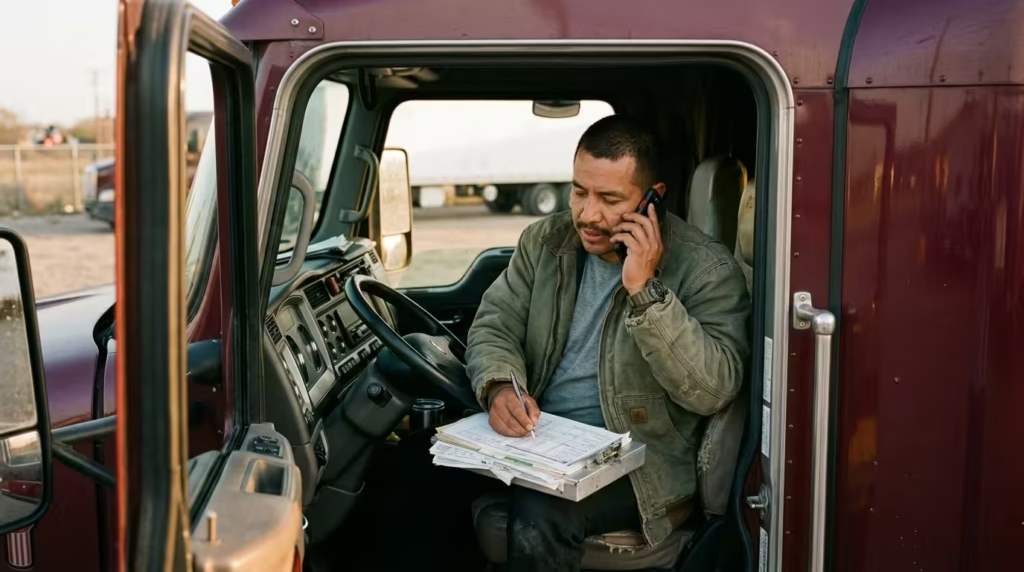

Most trucking businesses don’t start with an operations department, and most owner operators don’t start with a dispatcher. They start with a truck, a driver and someone determined to make the business work.
For many owner operators, that means doing practically everything themselves, including the work of a dispatcher, often while spending most of the day behind the wheel:
- Finding loads on the boards
- Negotiating rates
- Communicating with brokers
- Managing paperwork
- Coordinating deliveries
In the beginning, that level of involvement makes sense. You know exactly what’s happening with every load. You keep direct relationships with brokers, and you control the decisions that affect your revenue.
Then the business starts growing. Perhaps you buy a second truck or bring another driver into the operation. What felt manageable becomes complicated, and tasks that once took a few hours start competing for your attention all day. Eventually, you face an important question: when does managing everything yourself stop being an advantage?
Growth Changes How an Owner Operator Spends Time
Imagine you’ve recently expanded from one truck to three. You’re still finding loads and coordinating deliveries, but now you’re also managing several drivers, different schedules and multiple broker conversations. On a normal afternoon, it can look like this:
- You’re negotiating one load when another driver calls about a delivery appointment.
- A broker needs an updated ETA right away.
- Your third driver is heading toward an empty trailer situation that needs immediate attention.
- Tomorrow’s operation still hasn’t been planned.
None of these responsibilities is unusual in trucking. The problem is that they increasingly demand your attention at the same time.
As an owner operator, your business may have depended on your ability to handle everything personally. As a fleet owner, that same habit can become a limitation. You need time to evaluate profitability, develop broker relationships, manage expenses and plan the company’s future. When every operational detail requires your involvement, finding that time gets difficult.
For an owner operator, hiring a first dispatcher is often less about the number of trucks you own. It’s more about recognizing that your role has changed.
Signs an Owner Operator Needs Dispatcher Support
There isn’t a universal fleet size at which a dispatcher becomes necessary. Two companies with the same number of trucks can have completely different needs depending on their lanes, customers, schedules and existing administrative support. Still, some changes are worth watching as your operation expands.
Your Availability Starts Affecting the Business
This is one of the clearest signs. Perhaps you’re missing broker calls because you’re handling another issue. Or you’re spending so much time coordinating existing loads that you have fewer chances to evaluate new ones.
The Work Follows You Home
Another warning sign appears when operational problems start following you home. Maybe you’re constantly answering calls after your workday ends, completing paperwork late at night or struggling to take time off. In that case, your current structure may no longer support the operation you’ve built.
The financial impact isn’t always obvious. You might still be generating revenue and keeping your trucks moving. However, the time spent on routine activities has an opportunity cost. Every hour dedicated to tracking a shipment or chasing documentation is an hour you can’t spend developing the business.
Your First Dispatcher Should Give You More Than Free Time
When fleet owners start considering dispatch support, it’s natural to focus on the immediate workload. They want someone who can communicate with drivers, coordinate loads, provide updates and manage the daily tasks that have become hard to handle alone.
Those are important functions, but a dispatcher’s value goes beyond removing tasks from your schedule. A reliable dispatcher brings consistency to your operation. Brokers receive timely communication, and drivers have a dedicated point of contact. Important information is also less likely to get lost between competing responsibilities.
That consistency becomes more valuable as the fleet grows. It also lets you approach your role differently. Instead of reacting to operational issues all day, you can focus on evaluating lanes, keeping customer relationships strong and planning future expansion.
Of course, hiring someone doesn’t automatically produce those results. For the relationship to work, your dispatcher needs:
- A clear understanding of how your operation runs
- Well-defined responsibilities
- Clarity on which decisions still require your approval
The goal is a working relationship that gradually reduces your involvement in routine coordination without removing your control over the business.
Can a Small Fleet Afford a Dedicated Dispatcher?
For many owner operators, deciding on a dispatcher is where things get complicated. You may know your business needs more support and still hesitate about the cost of another full-time employee.
Recruitment, compensation, training and employment expenses can be a significant investment for a small fleet. That’s especially true when revenue fluctuates or you’re still paying for recently acquired equipment. It’s understandable to question whether your operation is large enough to justify that expense.
However, comparing a dispatcher’s cost against your current payroll doesn’t tell the whole story. You also need to consider what managing dispatch personally is costing the business in time and missed opportunities.
Why Nearshore Staffing Changes the Math
This is where dedicated nearshore staffing becomes worth exploring. Rather than hiring only within the United States, trucking companies can recruit experienced bilingual professionals in countries such as Colombia. Lower employment costs and overlapping business hours can make dedicated operational support financially accessible.
For a growing fleet, that can make it possible to create a dispatch position earlier than expected. The key is finding someone who understands the responsibilities involved and can integrate into your existing operation.
Owner Operators Don’t Have to Give Up Control to a Dispatcher
Some owner operators hesitate to explore outsourcing because they’ve spent years building their businesses. They don’t want to hand important decisions to someone who doesn’t understand their operation. That’s a reasonable concern, particularly if you’re used to managing drivers, negotiating rates and keeping broker relationships yourself.
But hiring external support doesn’t have to mean handing your business to an outside dispatch company. Our dedicated staffing model at NextWave lets trucking companies recruit professionals who work specifically within their operations. Rather than assigning your trucks to an independent dispatch service, you add a professional to your existing team. Here’s how it works:
- We learn how your fleet operates, which responsibilities you want to delegate and what experience your dispatcher needs.
- Our team recruits bilingual professionals in Colombia based on those requirements.
- You interview the candidates and select the person you want.
- Next Wave manages the local employment structure while your dispatcher works within your systems, schedule and procedures.
You keep control over your fleet and decide how responsibilities are distributed. And if you’re not ready to delegate the entire dispatch function, there’s another option worth considering.
Sometimes an Owner Operator’s First Hire Isn’t a Dispatcher
As your fleet grows, you may discover that the biggest problem isn’t finding loads or coordinating drivers. It’s everything happening around those responsibilities. Several tasks can consume a big part of your day without requiring you to make every decision:
- Tracking shipments
- Sending routine updates to brokers and customers
- Confirming appointments
- Organizing BOLs, PODs and other documentation
If you’re comfortable managing dispatch but overwhelmed by the administrative work around it, dedicated tracking or back-office support might be a better first hire. This distinction matters. Adding the wrong position can create unnecessary expenses without addressing the workload that’s actually limiting your business.
For an owner operator weighing a dispatcher against tracking support or another administrative professional, we can help you evaluate which one your operation needs most. That decision should reflect how your fleet actually runs, not a predetermined hiring formula. If you run loads around the clock, it’s also worth reading about the hidden cost of after-hours dispatch coverage.
Building a Fleet Means Building a Team
Growing from an owner operator into a fleet owner involves more than buying more trucks. At some point, it requires an operation that can function without you in every conversation and every decision. That’s also a matter of safety: a driver who spends the day on calls and paperwork is still bound by federal hours-of-service rules.
That transition doesn’t happen overnight, and hiring your first dispatcher won’t solve every challenge of running a trucking business. But the right support can help you manage your existing trucks more consistently while creating room to focus on growth.
If you’re spending more time coordinating your fleet than developing your business, it may be worth exploring what a dedicated nearshore professional could contribute. At Next Wave, we help growing U.S. trucking companies build dedicated teams in Colombia, starting with the positions their operations actually need. Whether you need your first dispatcher or someone to handle tracking and admin work, we’ll help you define what that role should look like.
Let’s talk about your fleet and find the kind of support that makes sense for your next stage of growth. Explore our staffing solutions for U.S. companies to get started. Growing your trucking business shouldn’t mean doing everything yourself.
