

The construction outlook 2027 points to modest growth, but rising costs mean contractors will protect margins through tight purchasing, clear documentation and enough administrative support. The U.S. construction industry is approaching 2027 with cautious optimism. New opportunities are emerging in several sectors. Rising costs, labor constraints and uneven demand still challenge contractors trying to keep healthy profit margins.
For construction companies, the coming year raises an important question. How do you prepare for growth without letting operational costs grow faster than revenue?
The answer involves more than negotiating better material prices or submitting competitive bids. It also requires a look at how efficiently projects are managed behind the scenes, from purchasing and vendor coordination to documentation, billing and administrative support.
As contractors prepare their 2027 budgets, these operational decisions could matter as much as the projects they choose to pursue.
What Does the Construction Outlook 2027 Reveal?
The construction outlook 2027 shows a recovery, but an uneven one. According to the American Institute of Architects’ July 2026 Consensus Construction Forecast, U.S. nonresidential building spending is projected to grow 3.0% in 2027. That follows an expected 0.3% decline in 2026.
Growth will not be evenly distributed
- Commercial construction: expected to grow 5.8%, supported by continued investment in data centers.
- Healthcare construction: projected to grow 4.4%.
- Traditional office construction: faces a more challenging outlook.
This uneven growth means contractors need to watch their specific markets rather than rely on national projections alone.
A company building healthcare facilities may see a very different pipeline from a contractor focused on office buildings. Firms in regions with major industrial or technology investments may find stronger demand. They may also face more competition for labor and suppliers.
Cost pressures remain significant
JLL’s November 2026 U.S. Construction Perspective forecasts construction tender price increases of about 3.1% to 4.2% in 2027. The Associated General Contractors of America also reported that input prices for new nonresidential construction rose 13.3% year over year through October 2026.
For contractors preparing estimates today, these figures reinforce a critical point. Winning more projects does not automatically mean higher profitability.
A strong pipeline creates opportunities. Margins stay vulnerable, though, when budgets rely on outdated quotations, procurement is delayed or unexpected expenses are not caught early.
Where Construction Margins Disappear After the Bid Is Won
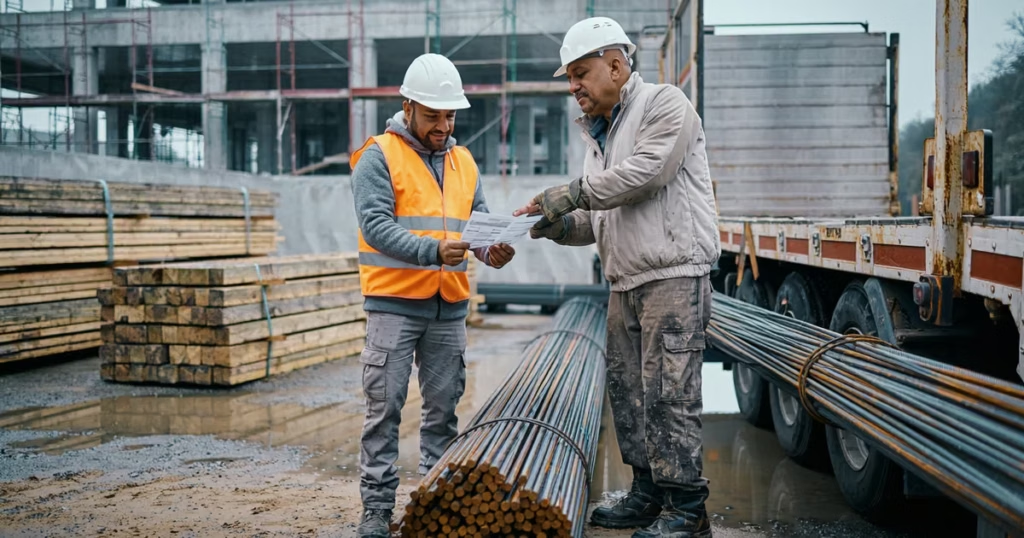
Consider a contractor that wins a project based on carefully calculated material and labor costs. The estimate looks profitable, the schedule is approved and work begins as planned.
A few weeks later, small problems start to appear:
- The supplier updates its pricing.
- One purchase order is delayed because a specification was never confirmed.
- Vendor invoices stop matching the original quotation.
- Change orders stay undocumented while the field team keeps working.
None of these issues necessarily stops construction. Each one, however, creates extra work, uncertainty and financial exposure. Across several projects, small discrepancies can add up to meaningful losses.
Profit depends on execution, not only estimating
This is why construction profitability depends on more than accurate estimating. It also requires consistent execution of the administrative processes behind each project.
Purchasing teams compare quotations, verify orders and track deliveries. Project administrators keep documentation accurate. Accounting departments need reliable records to reconcile invoices and monitor expenses.
When those tasks fall behind, contractors lose visibility into real project costs until problems are harder to fix. In a market where material prices remain volatile, that delay can be especially expensive.
Growth Can Expose Administrative Bottlenecks
When construction companies plan to expand, they naturally focus on hiring people to execute more projects. That usually means project managers, superintendents, estimators and skilled field personnel.
Every new project also generates more administrative work. More vendors need to be contacted and more quotations must be reviewed. Purchase orders, invoices, delivery confirmations and project documents all grow with the workload.
Signs your team has hit the limit
- A purchasing manager who handled three projects struggles with five.
- An estimator spends hours chasing supplier pricing instead of preparing new bids.
- Project managers update spreadsheets and organize files late into the evening.
- Experienced employees spend too much time on tasks below their level of expertise.
The first reaction may be to hire another manager. Sometimes, though, the real problem is not a lack of management capacity. It is a lack of dedicated administrative support.
Support roles that protect your margins
A purchasing agent who manages quotations, orders and vendor follow-ups can relieve pressure on project managers. A document controller keeps project records organized. Billing or accounts payable support helps finance teams keep transactions and backup documents up to date.
These positions do not replace the judgment of experienced construction professionals. They give those professionals more time to apply it where it matters most.
For contractors planning their 2027 headcount, this distinction helps expand capacity without adding unnecessary management overhead. Our guide on planning 2027 headcount covers the timing, and this one explains why managers shouldn’t do admin work.
Why Remote Support From Colombia Is a Practical Option
Many administrative tasks behind construction projects no longer require someone at the jobsite. Purchasing requests arrive through digital platforms. Vendors communicate by email and phone, and project documents live in cloud-based systems.
This lets contractors build dedicated support teams beyond their local labor market. Nearshore staffing, particularly in Colombia, gives U.S. businesses access to bilingual professionals who work during overlapping American business hours.
Real-time collaboration matters in construction
A purchasing agent may need a quick answer from a project manager before placing an order. A vendor might need to confirm a delivery schedule. Accounting may need more documentation before processing an invoice.
When the administrative team works alongside the U.S. operation, these issues get solved the same business day instead of waiting for the next shift.
Depending on the role and employment arrangement, this model can also cost less than expanding domestic administrative headcount. The goal is not simply to reduce payroll. It is to build reliable support that keeps purchasing, documentation and project costs under control as the business grows.
Building Construction Support Teams With NextWave
At NextWave, we help U.S. construction companies recruit dedicated bilingual professionals in Colombia for administrative and operational roles.
For some contractors, the biggest need is purchasing coordination. That means requesting and comparing vendor quotations, preparing purchase orders, tracking deliveries and following up on discrepancies. Others benefit more from bid coordination, document control, construction billing or accounts payable support.
How the process works
- Understand your workflow. We review your systems and the tasks you can delegate without handing off critical project decisions.
- Recruit to your requirements. We find qualified candidates, and you interview and select the right professional.
- Manage the local side. We handle the employment structure and HR administration in Colombia.
- You stay in control. You direct the employee’s daily work, procedures and priorities.
This approach lets contractors build administrative capacity around real needs, not around overwhelmed managers. It also helps companies decide which tasks can be supported remotely before committing to more domestic overhead.
Frequently Asked Questions
Is construction spending expected to grow in 2027?
Yes, modestly. The AIA forecast projects 3.0% growth in nonresidential building spending in 2027, led by commercial and healthcare projects.
Which construction office roles can be filled remotely?
Purchasing agents, document controllers, bid coordinators, construction billing and accounts payable specialists can all work remotely with your systems.
Will a remote hire work my business hours?
Yes. Professionals in Colombia work U.S. hours, so questions get answered the same day.
Preparing for 2027 Requires Financial and Operational Discipline
The construction outlook for 2027 offers reasons for optimism. The companies best positioned to benefit will not necessarily be the ones chasing the most projects.
They will be the ones that understand their costs, keep reliable purchasing processes and have enough capacity to manage growth without losing control of their margins.
That preparation starts with realistic estimates and current supplier information. It continues through every stage of project execution, with clear documentation, timely communication and people who consistently manage the administrative work.
As you review your 2027 budget, ask two questions. How many more projects can your company win? Does your current team have the capacity to support them efficiently?
See how we help contractors on our construction staffing page, or talk to our team to build the support your business needs for 2027.
Profitable growth is not simply about taking on more work. It is about having the right people and processes to deliver it.
