


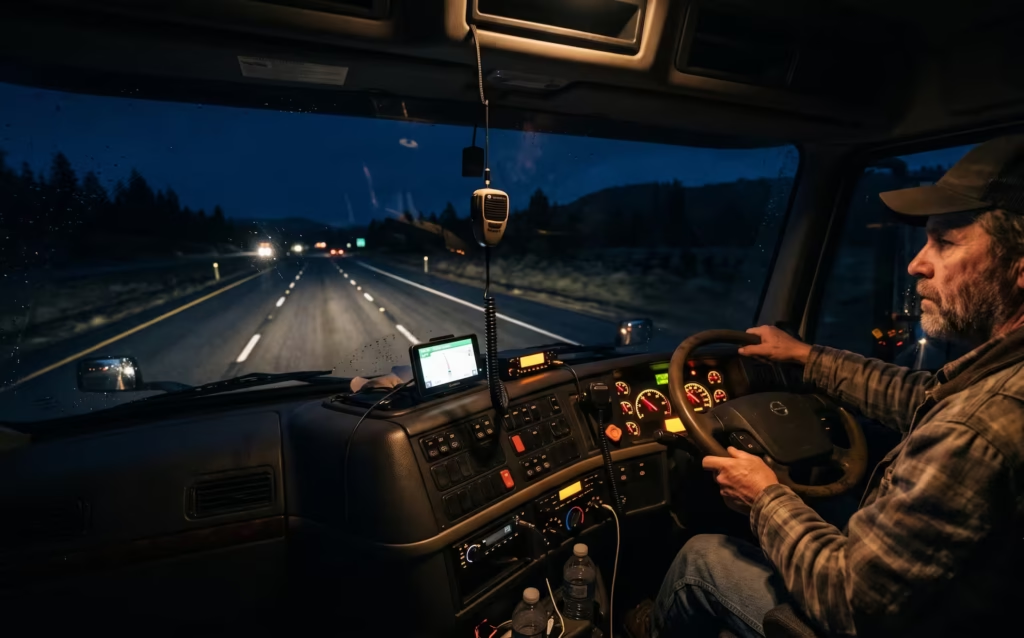
In the trucking industry, timing is everything. A load opportunity can appear at 7:00 PM. A driver may need urgent support at midnight. A broker might send an update over the weekend that requires immediate action. However, for many U.S. fleets, after-hours dispatch coverage still follows a traditional 9 to 5 schedule — and that gap is costing more than most companies realize.
When dispatch teams are unavailable after business hours, fleets face challenges that go beyond missed phone calls. A few hours of delay can lead to missed load opportunities, slower broker response times, longer driver downtime, and a weaker customer experience.
To understand how U.S. fleets are solving this problem, explore NextWave BPO’s Truck Dispatch Services.
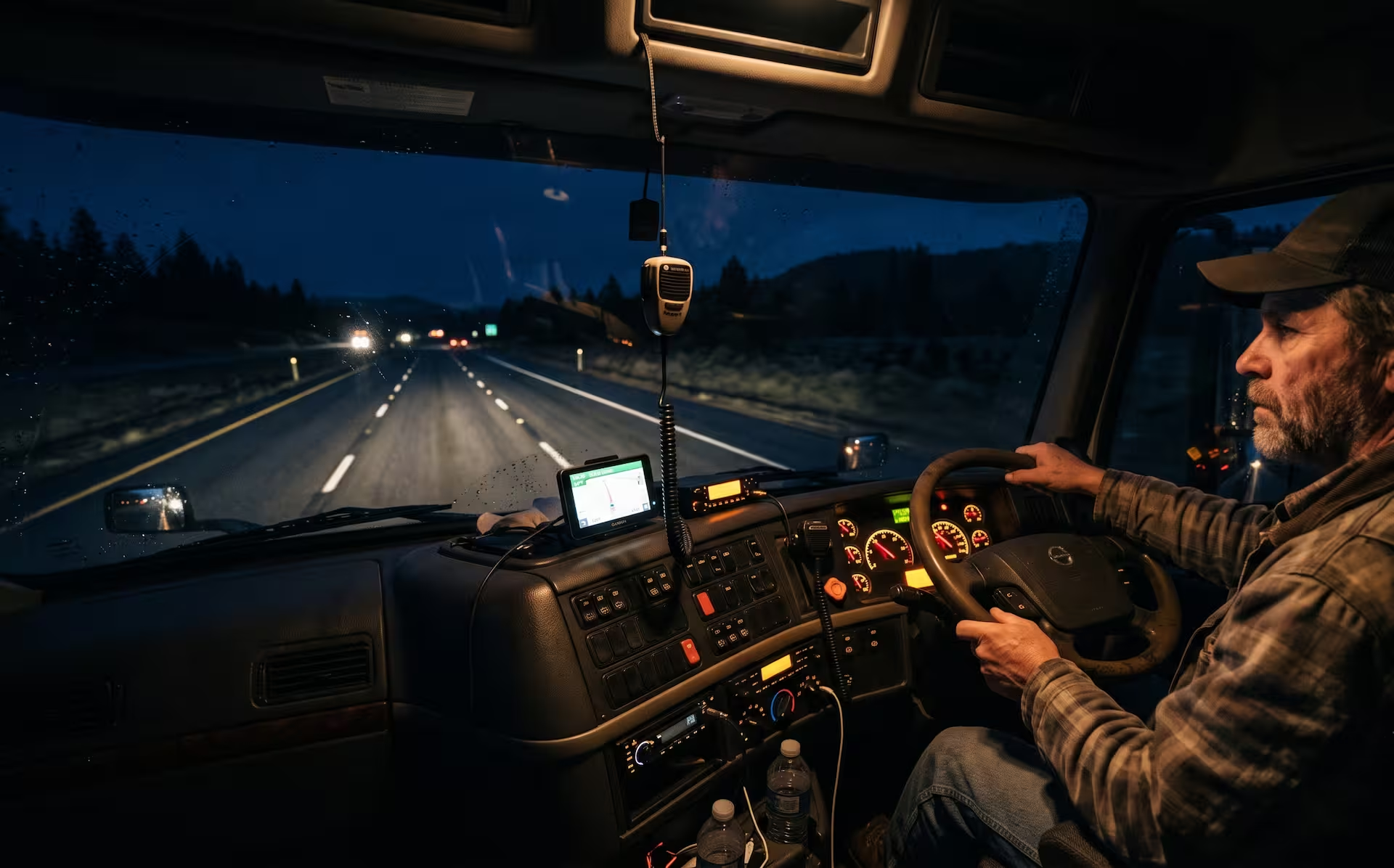
The real cost of gaps in after-hours dispatch coverage
In a market where margins are already tight, small delays can quickly become expensive problems. Drivers are on the road 24/7, but many support operations are not. That disconnect creates unnecessary friction — and it shows up in ways that compound over time.
Here is what fleets typically lose when after-hours dispatch coverage is unavailable:
- Load opportunities that disappear before the morning team arrives
- Broker relationships damaged by slow or missing responses
- Drivers left without support during breakdowns, delays, or route changes
- Customers who experience poor communication and look elsewhere
- Revenue that quietly walks out the door after 5:00 PM
Furthermore, the cost is not always visible on a single day. It accumulates across weeks and months — in lost loads, frustrated drivers, and broker relationships that slowly erode. By the time most fleets recognize the problem, the damage is already done.
Trucking never stops — so why should dispatch?
Modern fleets are no longer competing only on rates. They are competing on reliability, speed, and service. A shipper or broker does not care if a fleet’s internal office is closed. They care about getting answers, updates, and solutions when they need them.
The fleets building stronger after-hours dispatch coverage gain a real operational advantage. This does not necessarily mean hiring a larger in-house team or increasing overhead. Instead, it means finding smarter ways to create reliable coverage without expanding fixed costs.
According to the Federal Motor Carrier Safety Administration, the trucking industry moves over 70% of all freight in the United States — an operation that runs around the clock, every day of the year. The support structure behind that freight should match the same standard.
What strong after-hours dispatch coverage actually looks like
For fleets serious about closing the after-hours gap, the solution is not simply asking the existing team to work longer hours. That approach leads to burnout, mistakes, and turnover — which creates a different and more expensive problem.
Effective after-hours dispatch coverage typically includes:
- Evening and overnight dispatch support — covering the hours when in-house teams are unavailable
- Weekend operational coverage — ensuring brokers and drivers have a reliable point of contact
- Check calls and ETA updates — keeping loads moving and customers informed outside business hours
- Driver communication and breakdown support — responding to urgent situations in real time
- Broker follow-up and load tracking — protecting relationships that depend on fast, consistent communication
Additionally, this coverage needs to be consistent — not a patchwork of on-call arrangements that create uncertainty for drivers and brokers alike. Learn more about how dedicated dispatch support works at NextWave BPO’s for companies page.
Flexible dispatch teams: a more scalable solution
Many successful fleets are turning to flexible staffing models to extend their operational hours without the cost of traditional expansion. With dedicated remote teams, companies can access trained dispatch support during evenings, nights, weekends, and peak operational periods.
For U.S. fleets, Colombia has become an increasingly attractive option — and for reasons that go well beyond cost:
- Full time zone alignment with U.S. Eastern and Central hours
- Bilingual dispatch professionals with direct U.S. freight experience
- Cultural alignment with U.S. business communication standards
- Significant cost advantage compared to equivalent domestic hires
- Scalable model — add coverage as the fleet grows without fixed overhead
The result is better coverage, faster responses, improved driver support, and a stronger customer experience — without the financial burden of expanding an in-house team. Use the NextWave cost calculator to estimate what extended coverage could cost for your fleet.
The impact on driver retention and broker relationships
After-hours dispatch coverage does more than keep loads moving. It directly affects two of the most critical relationships in any fleet’s operation — drivers and brokers.
Driver retention
Drivers who feel supported — especially during night runs, weekend hauls, and unexpected situations — stay longer. A driver who calls for help at midnight and reaches a real person is a driver who feels valued. Moreover, that feeling of support is one of the strongest predictors of long-term retention in an industry with notoriously high turnover.
Broker relationships
Brokers remember which carriers respond quickly and which ones go dark after 5:00 PM. Consequently, the fleets with consistent after-hours availability are the ones that get first access to premium loads — because reliability is worth more than rate alone in a competitive freight market.
After-hours dispatch coverage: what the numbers say
The financial case for extended dispatch coverage becomes clear when you compare the cost of gaps against the cost of the solution:
| Operational gap | Typical cost |
|---|---|
| One missed load per week | $500 – $2,500 in lost revenue |
| Driver turnover (one driver) | $5,000 – $15,000 in recruiting and downtime |
| Lost broker relationship | Difficult to quantify — often permanent |
| Nearshore after-hours dispatch support | $1,500 – $2,500 per month |
Therefore, for most fleets, the cost of extended coverage pays for itself with a single recovered load per week — and the compounding benefits to driver retention and broker relationships add value that is harder to put on a spreadsheet but impossible to ignore.
Build your after-hours dispatch team with NextWave BPO
NextWave BPO helps U.S. fleets build dedicated remote dispatch teams in Colombia that provide reliable after-hours coverage — keeping operations connected to drivers, brokers, and customers whenever business demands it.
- Bilingual dispatch coordinators with direct U.S. freight experience
- Evening, overnight, and weekend coverage — fully aligned with U.S. time zones
- Check calls, ETA updates, broker communication, and driver support
- Candidates presented within 5 to 7 business days
- Scalable model — add coverage as your fleet grows
The future of fleet operations is always-on support
The trucking industry has changed. Customer expectations are higher, competition is stronger, and opportunities move faster than ever. Fleets can no longer afford operational blind spots during the hours when business is still happening. Therefore, the most successful fleets are recognizing that after-hours dispatch coverage is not simply an additional expense — it is a strategic advantage that protects revenue, improves driver retention, strengthens customer relationships, and keeps operations moving around the clock. Because freight never stops, and neither should your ability to support it.
