


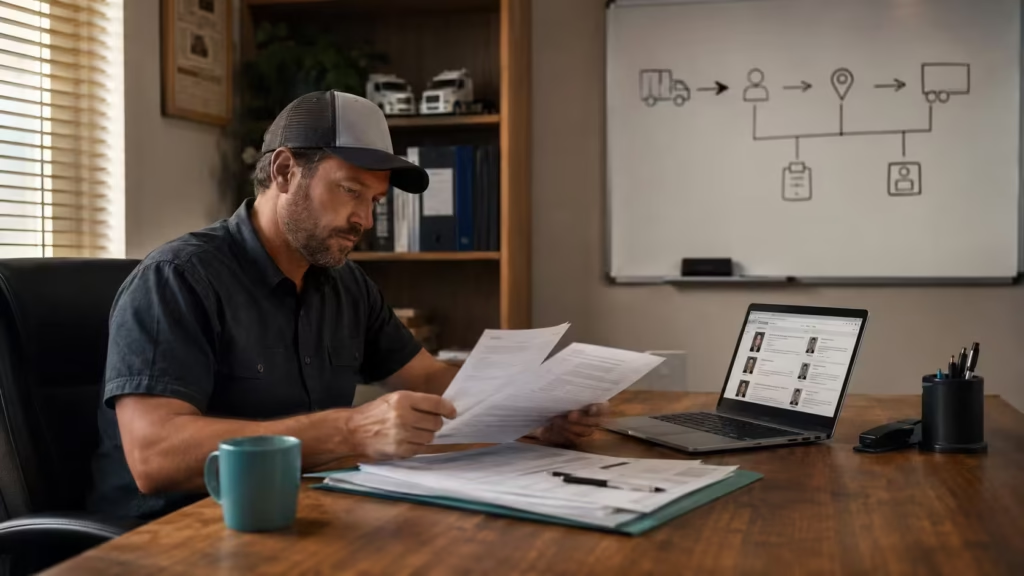
Hiring a remote dispatcher for your trucking operation can be one of the best investments a growing company makes — but only if you hire the right person. As freight volumes increase and operations become more complex, many fleet owners reach a point where handling dispatch internally is no longer sustainable.
Calls come in nonstop, brokers expect immediate updates, drivers need constant support, and administrative work begins to consume valuable hours. The obvious solution is to hire another dispatcher. The difficult part is knowing what to look for.
While technical knowledge certainly matters, the most successful remote dispatchers bring much more than experience with load boards or transportation software. They become the communication hub between drivers, brokers, customers, and your internal team. Choosing the right professional can improve efficiency and help your business scale — choosing the wrong one can create delays, frustration, and costly mistakes.
Start by defining what you actually need
One of the biggest hiring mistakes is searching for a dispatcher before defining the role. Ask yourself:
- Will this person dispatch loads throughout the day?
- Will they communicate directly with brokers?
- Will they manage check calls and appointment scheduling?
- Will they handle documentation and Bills of Lading?
- Will they support drivers after business hours?
Every trucking company operates differently. Understanding your own workflows before hiring makes it much easier to find someone whose skills match your operational needs.
Communication is more valuable than technical knowledge
Transportation is built on communication. A dispatcher speaks with drivers, brokers, warehouses, customers, and internal teams throughout the day. Every conversation has the potential to solve a problem or create one.
Why soft skills are harder to teach than software
That’s why excellent communication skills are often more valuable than technical expertise alone. Anyone can learn software. However, professional communication, active listening, and the ability to remain calm under pressure take much longer to develop. A dispatcher who communicates clearly can prevent misunderstandings, reduce delays, and build stronger relationships across your entire operation.
Look for strong problem-solving skills
No two days in trucking are exactly the same. Weather changes. Appointments fall behind. Drivers encounter unexpected situations. Brokers reschedule loads. Customers request last-minute updates.
The best dispatchers don’t panic when plans change. Instead, they evaluate the situation, prioritize solutions, communicate proactively, and keep operations moving. When interviewing candidates, ask about situations they’ve handled rather than simply reviewing their resume — past behavior often provides the best indication of future performance.
Organization keeps freight moving
Successful dispatchers manage dozens of moving pieces at the same time. Schedules, appointments, emails, documentation, phone calls, tracking updates, and driver communications all compete for attention throughout the day.
Without strong organizational skills, small details can quickly become expensive problems. Look for candidates who demonstrate structured workflows, attention to detail, and the ability to prioritize multiple responsibilities at once.
Technology matters, but adaptability matters more
Most dispatchers use Transportation Management Systems (TMS), GPS tracking platforms, communication tools, document management systems, and load boards every day. Experience with these tools is certainly valuable. However, technology changes quickly.
A dispatcher who learns new systems efficiently often provides greater long-term value than someone with experience on only one platform. In short, curiosity and adaptability are becoming just as important as technical proficiency.
Consider the benefits of nearshore dispatch talent
Many U.S. trucking companies are expanding their teams through nearshore staffing. Countries like Colombia have earned recognition for their growing pool of bilingual logistics professionals who support U.S. carriers every day.
Working within similar time zones allows for real-time communication, while dedicated remote professionals integrate directly into existing dispatch operations. For many fleets, this approach provides access to qualified talent while maintaining flexibility and controlling operational costs. If you’re also comparing this to a broader operational strategy, see our guide on how small fleets are competing with large carriers using nearshore support.
Build a team, not just a position
Don’t think of hiring a dispatcher as simply filling another role. Instead, think of it as strengthening your entire operation.
The right dispatcher improves communication, supports drivers, builds stronger broker relationships, keeps customers informed, and creates smoother day-to-day operations. As your fleet grows, having dependable operational support becomes one of your greatest competitive advantages. According to the American Trucking Associations, operational efficiency continues to be one of the biggest differentiators between fleets that scale successfully and those that stall.
Find the right fit with NextWave
At NextWave, we help U.S. trucking companies build dedicated bilingual dispatch teams in Colombia that integrate seamlessly into existing operations. We carefully select our professionals for their communication skills, logistics knowledge, problem-solving ability, and commitment to delivering exceptional service.
Talk to NextWave →Because the best dispatchers do far more than move freight. They keep your entire operation moving forward.
